The coronavirus has thrown the world’s population into a state of utter panic since early December.
Not because it’s more deadly than the flu, as our medical professors and researchers explain, but because it’s far more contagious, and, at present, we have no vaccine to protect against it, and no specific treatment for it, aside from the antiviral drugs we already know about. That is why non-pharmaceutical preventive measures will be the most important tools in our response to this virus.
In France, our healthcare system—one of the best in the world—aided by the measures taken by our government, has so far succeeded in bringing the situation fully under control: suspected cases have been isolated and quarantined; the 12 people currently infected in France have been treated; only one person remains hospitalized; and there has been one death—a person in their 80s.
But despite all these precautions, we cannot keep this virus out of our country, and we must be prepared for new cases to emerge here.
The concern: the number of people infected in Italy has surged in 48 hours. Italy is one of our neighboring countries, and the affected regions are closer to the Alpes-Maritimes than Paris.
We shouldn’t panic, but it’s time to take precautions—and, above all, minimize risks as much as possible—to avoid getting infected and infecting others.
In the Alpes-Maritimes, everyone is prepared to deal with a potential outbreak.
The Nice University Hospital will be equipped in the coming hours to conduct tests for the COVID-19 coronavirus. The hospital will have an infectious disease specialist on duty 24 hours a day who will be in contact with the emergency medical services (SAMU) to assess and classify suspected cases.
A secondary-care system with facilities around Nice will be able to accommodate patients once they have completed treatment for their convalescence.
A daily task force has been established to assess the situation.
Prevention:
• Avoid putting your hands in your mouth or nose and touching your eyes when you’re outside, and explain to children not to do so:
During periods of potential exposure, it’s crucial to take preventive measures and practice strict hygiene. If you’re outside, your hands may come into contact with a contaminated surface or object. It’s therefore in your best interest to wash your hands before touching your nose or mouth. It’s also important to explain this to children over and over again. It’s not easy for them to follow these kinds of rules, especially when they’re playing.
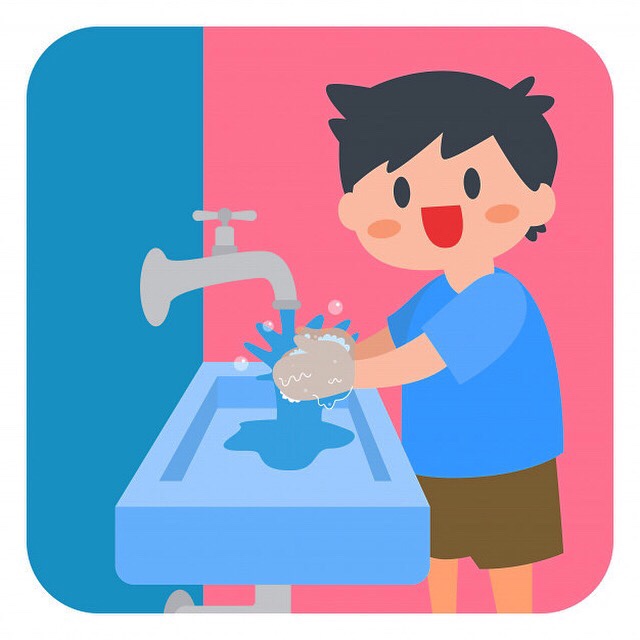
• Wash your hands frequently:
Be sure to wash your hands every time you come back from outside. Wash your children’s hands, too, This is a habit you need to get into. Keep in mind that, on average, we touch our faces 3,000 times a day, The hands are the first virus vector.
- Before and after meals
- Before and After Using the Restroom
- After sneezing
- After blowing his nose
- When getting off the bus, train, or tram
- After touching a surface outside
• Do not spit on the street or anywhere else:
If you need to cough, do so into a disposable tissue so you don’t spread the virus to others if you’re infected. Throw the tissue in a trash can; don’t throw it on the ground. Don’t spit your gum on the ground, and tell your children not to do it either.

• On public transportation:
Even though we’re currently being told in France that wearing a mask isn’t necessary, it still helps prevent the spread of the virus, so I recommend that you wear masks on public transportation, especially if you feel feverish. They protect you and others as well. To get some, try looking for them at pharmacies; if you can’t find any, don’t panic—for now, there’s no urgent need, and if there were, our government would find a solution.

Buy antibacterial gel (hydroalcoholic gel) Pick it up at the pharmacy and put it in your bag. You can find it at any pharmacy in the Alpes-Maritimes, and there are pharmacies everywhere. This gel helps you eliminate all germs from your hands and your children’s hands. Teach your children how to use it—it’s a habit to adopt from now on that can help prevent infection.

Without letting it turn into a panic, keep your distance from people who are coughing. Even though we know that you can be infected and contagious without showing any symptoms of a cough, when someone coughs, they can more easily spread the virus to those around them.
In public places, bars, movie theaters, and stores:
Follow the same guidelines as you would on public transportation: the more precautions we take, the less the virus will spread in our country. In restaurants or bars, do not share your glasses or utensils.
In public restrooms:
- Don’t sit on the toilet
- Touch as few surfaces as possible
- Wash your hands after

When you get home:
- Take off your shoes
- Wash your hands
- Do you wash your face?
- Do not share utensils or glasses
- Don’t share toothbrushes
- Wash your hands after using the restroom
Everywhere :
- No More Handshakes
- Stop kissing each other on the cheek to say hello
If you have a fever or a cough:
Don’t panic, it’s quite common this time of year—the flu is already going around, and there are other viruses floating about too—so don’t stress out, stay calm, and Call 15. They are the only ones qualified to make a diagnosis and tell you what to do.

Things you should definitely avoid doing:
- Do not go to a hospital’s emergency room.
- Don’t go to a medical testing lab to get a test—they don’t have any.
- Do not see a general practitioner.
- Don’t go to a pharmacy to ask for advice.
The reason: if you’ve contracted the virus, you’ll spread it very quickly. You need to think about yourself, but also about others.
If you have any doubts—perhaps because of a fever— If you have a cough or a high fever, call 15—they’ll tell you what to do.
Important:
Don’t tie up the 15 lines for trivial matters.
Call if you have actual symptoms.
Don’t call if you’ve come across someone who is coughing or an Asian person.
In this kind of situation, it is very important to use common sense so as not to penalize those who are actually experiencing symptoms.
In Monaco:
The Monegasque government has announced that it is prepared, so there is no need to panic if you experience symptoms in Monaco.
If you have symptoms, call 18 or 112.
Do not go to the emergency room at Princess Grace Hospital.

The same preventive measures as in France.
For detailed explanations:
Toll-free number: 0800 130 000.
https://www.who.int/fr/emergencies/diseases/novel-coronavirus-2019/advice-for-public
https://www.who.int/csr/disease/coronavirus_infections/faq/fr/
“Fear doesn’t keep danger away, but it’s better to be safe than sorry,” so be proactive and cautious, but don’t panic over nothing.
All of these guidelines seem obvious and trivial, yet they are almost never followed.
In France, we are fortunate to have excellent medical care, and we must trust those who treat us.
Our researchers will find a vaccine and a treatment, but they need time. That’s why we must absolutely prevent the virus from spreading here and take preventive measures—without stress or panic, which are counterproductive.
It is in situations like this that we realize that France and the Principality of Monaco have a unique and exceptional healthcare system, and that is why we must protect and defend it.
Leave a Reply